Biodiversity Videos
What do gray wolves, elephants, and parrotfish have in common? They’re all keystone species, which means they have an especially large impact on their habitat. SciShow explores how these animals keep their ecosystems running.
Fragmented forests create animal winners and losers. Breaking up the rainforest into small, isolated patches puts pressure on species that rely on the forest core, but benefits those who like the edges.
Canada’s polar bears attract tourists from around the world. But researchers say they’re fighting a losing battle with shrinking sea ice. In fact, the country’s famous polar bear population in Churchill, Man., could soon be gone.
Suzanne Simard, a professor of forest ecology at the University of British Columbia’s Department of Forest and Conservation Sciences, has conducted and published hundreds of experiments in forests. Her ground-breaking research has uncovered complex underground communication networks of trees. These dense webs are nurtured by mother trees, better known as hub trees, that send messages and carbon through nodes and links to younger trees. These interlinking fungal highways connect hundreds of plant species and increase the resiliency of the whole community.
One remarkable discovery made by Simard is that mother trees recognize their kin. They even send them additional carbon and information. Deforestation and logging practices threaten these remarkable ecosystems. Despite replanting efforts, forests require a complexity of species to survive.
Learn about what steps we can take to help protect our forests and prepare them for climate change in this enlightening TED Talk.
A multi-million dollar submersible robot with highly-advanced image capturing capabilities is leading a new marine expedition in the Gulf of St. Lawrence.
“The monarch butterfly is a true marvel of nature. Weighing less than a penny, it makes one of the longest migrations on Earth across a continent to a place it has never known. Follow the monarchs’ perilous journey and join hundreds of millions of real butterflies in the remote mountain peaks of Mexico, with breathtaking cinematography from an award winning team including Oscar winner Peter Parks. Be captivated by the true and compelling story of an intrepid scientist’s 40-year search to find the monarchs’ secret hideaway. Unravel the mysteries and experience the Flight of the Butterflies.”
How can the addition or removal of one species have an impact on other species? Watch and learn what happens to an entire ecosystem as wolves are reintroduced to Yellowstone National Park.
This video presents examples of keystone species and the important role they play in their ecosystems.
On October 8, 2017, “case71” spotted and recorded a large gathering of Monarch and Painted Lady butterflies in Toronto’s Kew Gardens, no doubt filling up before their migration south. Toronto’s parks are filled with plant life chosen to give these fussy eaters ample places to dine.
Featuring “The Legend of the Dragonfly” poem, by Walter Dudley Cavert, this animated video follows the metamorphosis of a dragonfly nymph. His transformative journey is illustrated through Claude Monet’s vibrant “Water Lilies” series and set to an original composition on piano, by Jaime Clifton-Ross, inspired by the dragonfly-filled ponds in the historic Hatley Castle gardens. As he flutters between lily pad and weeping willow, he comes to terms with leaving behind his loved ones and embracing his new form.
Speed talk for Resilience 2017, August 21, 2017, Stockholm, Sweden, very briefly summarizing her doctoral dissertation.
Researchers from the University of Washington and The Nature Conservancy recently released Migrations in Motion, a beautifully designed map that animates research from their 2013 study. It illustrates the average direction that 2,903 species of mammals, birds, and amphibians may need to migrate to as a result of climate change. While animals have moved to new habitats in the past, human development may block their pathways. Fortunately, there are many steps that conservationists and land managers can take to help them along their journeys—such as removing fencing, adding wildlife overpasses to major roadways, and improving infrastructure routes to help reconnect fragmented areas.

Nature Canada and The Monarch Teachers Network created this video to display the work teachers are doing in order to protect the Monarch butterfly.
Watch the magic of the Monarch butterfly’s life-cycle unfold in Nature Canada’s animated video.
The short film opens with two questions: “So what determines how many species live in a given place? Or how many individuals of the species can live somewhere?”
This video tells the story of the unsung heroes found below our footsteps and all around us – soil microorganisms. The video blends an informative interview featuring Valerie Behan-Pelletier (of the Canadian National Collection of Insects & Arachnids) with images of the bizarre and fascinating creatures that dwell underneath us.
What happens when a whale dies? This short musical piece explores the concept of succession, biology’s “life after death.”
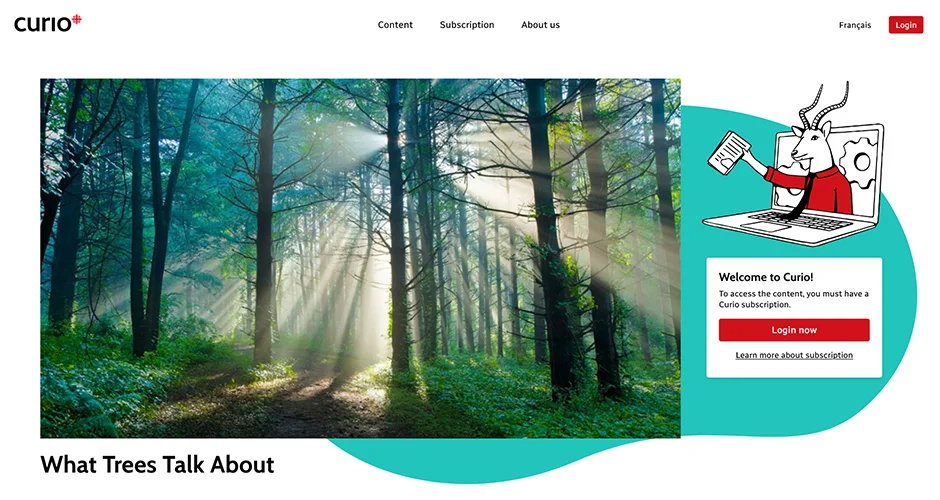
What Trees Talk About takes a revealing look at the secret life of trees – how they communicate, wage war, and work together to transform our world.
“Contrary to popular perception, trees don’t live in isolation. The boreal forest is a vast botanical network that circles the entire northern hemisphere. And trees living there have a secret social life, with the forest community joining ranks to work together. “We have this idea that trees are independent individuals…but what we have discovered is that they’re not independent, they will form unions,” says Annie Desrochers, a Quebec biologist featured in What Trees Talk About.
Smart and resilient, they share resources, fight animal predators and even change the weather. New research emerging from Canada’s boreal forest shows us that trees’ influence reaches well beyond their world — and into ours.”
The fate of wildlife in Canada is in our hands. WWF-Canada’s Living Planet Report Canada shows that wildlife is on a troubling decline. It’s time to come together and turn things around.